

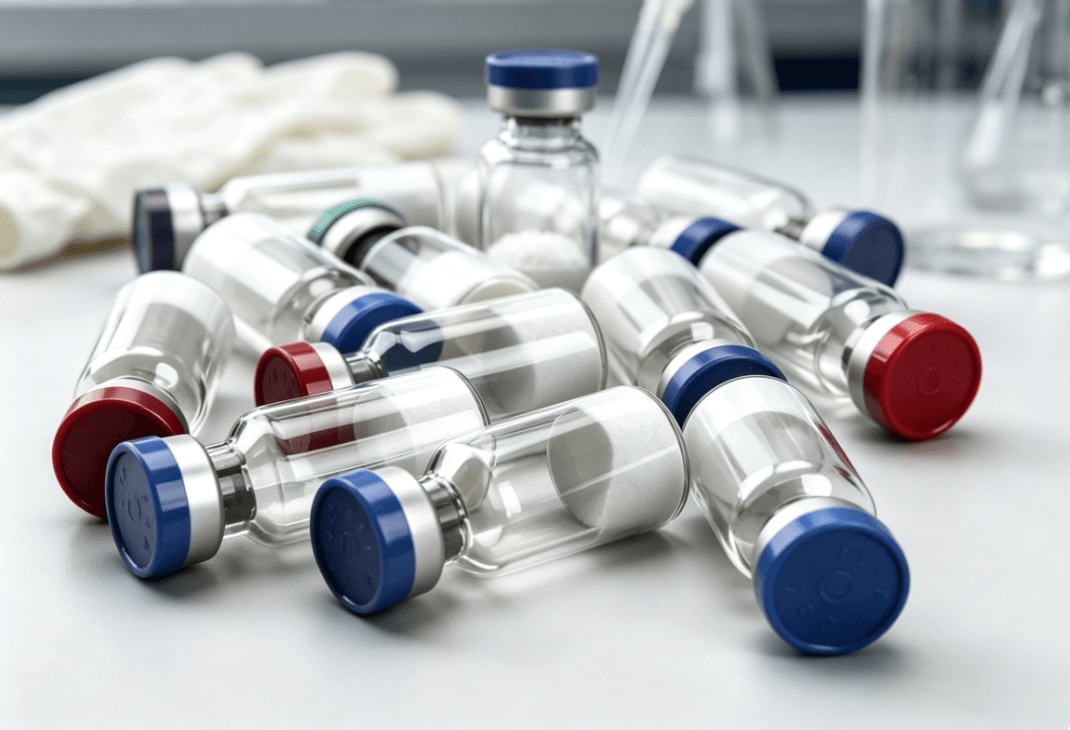
The global research peptide market functions as the operational backbone of modern biopharmaceutical discovery. In 2026, the demand for highly purified synthetic amino acid chains continues to accelerate across academic and private research institutions. Laboratories worldwide rely on these specific molecules to decode complex biological pathways and cellular communication mechanisms.
High-purity compounds are strictly required to ensure reproducible preclinical data. This unique market operates at the precise intersection of organic chemistry and molecular biology. Researchers need exact molecular sequences to manipulate specific cellular receptors during sensitive in vitro and in vivo animal testing.
Understanding the manufacturing innovations and analytical standards shaping this sector is critical for laboratory managers. We will examine how modern synthesis technology supports evolving scientific applications and drives experimental accuracy.
What Drives the Global Research Peptide Market Expansion?
Researchers increasingly favor synthetic peptides due to their high biological specificity and distinctively low toxicity profiles. These molecules occupy the critical structural space between small chemical drugs and large, complex proteins. They bind to cellular receptors with remarkable mechanical precision while avoiding unwanted off-target biological interactions.
The unprecedented clinical success of GLP-1 therapies has dramatically accelerated broader peptide research across the life sciences. Beyond standard metabolic studies, scientists now actively investigate novel dual and triple-receptor agonists. This paradigm shift requires a constant, reliable supply of diverse synthetic sequences for continuous experimental screening.
Funding for precision medicine initiatives is expanding rapidly across global research hubs. Advanced oncology and immunology research frequently utilizes synthetic peptides for targeted cellular delivery mechanisms. This structural laboratory demand fuels continuous, rapid advancements in peptide engineering and manufacturing technology.
How Solid-Phase Peptide Synthesis Controls Batch Consistency
Manufacturing these delicate compounds requires highly controlled and stable biochemical environments. Solid-phase peptide synthesis (SPPS) serves as the primary production methodology for commercial laboratory suppliers. This highly specialized technique anchors the initial amino acid to an insoluble resin matrix.
Scientists sequentially add specific amino acids to build the desired molecular chain from the ground up. Specialized coupling reagents facilitate these precise chemical bonds under strict environmental and temperature controls. Each synthesis step involves a targeted deprotection phase to prepare the molecular chain for the next incoming amino acid.
In 2026, automated continuous flow chemistry platforms heavily dominate laboratory production facilities. Automated fluidic systems manage chemical reagent delivery with absolute mechanical precision. This technological shift drastically improves sequence accuracy, lowers synthesis costs, and guarantees batch-to-batch consistency.
Common Peptide Formats in Laboratory Environments
| Delivery Format | Shelf Life | Immediate Usability | Primary Research Application |
|---|---|---|---|
| Lyophilized Powder | 12-24 Months | Requires Reconstitution | Long-term storage & distribution |
| Aqueous Solution | 1-4 Weeks | Ready to Inject/Apply | Immediate cellular assays |
Preclinical Application Scenarios for Synthetic Peptides
Preclinical research utilizes distinct peptide categories based entirely on their engineered structural properties. Metabolic research heavily relies on synthetic GLP-1, GIP, and glucagon receptor agonists. Investigators meticulously monitor how these specific sequences influence cellular energy expenditure in controlled assay settings.
Regenerative studies frequently employ specialized tissue repair compounds like BPC-157 and TB-500. Scientists observe fibroblast migration and angiogenesis patterns in highly controlled petri dish environments. These specialized molecules help researchers decode the fundamental cellular mechanisms behind rapid tissue healing.
Neuroscience laboratories utilize neurotrophic research compounds to study complex cognitive and synaptic pathways. Molecules such as Adamax, Semax, and P21 assist in modeling neural protection and cellular growth. These tools provide measurable data points regarding synaptic plasticity and neuronal survival rates under stress.
Myostatin inhibitors like ACE-031 support highly specialized musculoskeletal research initiatives. Researchers use these specific compounds to study muscle fiber hypertrophy and protein synthesis markers.
Analytical Verification Standards in Modern Laboratories
Reliable scientific data depends entirely on the absolute chemical purity of the research compound. The 2026 research peptide market demands strict analytical transparency from all biochemical suppliers. Contaminated laboratory materials can easily trigger false cellular responses and completely ruin expensive experimental models.
High-Performance Liquid Chromatography (HPLC) remains the unquestioned gold standard for purity quantification. The resulting HPLC chromatogram displays the exact percentage of the target peptide sequence present in the batch. Modern laboratories expect a minimum purity threshold of 99% for sensitive in vitro assays.
Mass spectrometry serves as a mandatory secondary verification tool for structural integrity. This equipment measures the precise molecular weight of the newly synthesized compound. This crucial analysis confirms that the amino acids assembled in the correct, intended sequential order.
Essential COA Verification Metrics in 2026:
Batch-specific tracking identification numbers for chemical traceability
HPLC chromatograms explicitly showing ≥99% target target purity
Mass spectrometry structural confirmation and molecular weight data
USP-compliant endotoxin screening results for biological safety
Testing validation executed by independent, ISO/IEC 17025 accredited facilities
Managing Lyophilized Compounds and Laboratory Biochemical Libraries
Proper handling actively preserves the delicate molecular integrity of sensitive research peptides. Even 99% pure compounds will degrade rapidly if exposed to improper environmental conditions. Temperature fluctuations actively break down the fragile amino acid bonds over a short period.
Lyophilized powders must remain sealed in strict cold storage until immediately required for laboratory testing. Standard scientific practice dictates keeping unconstituted vials at -20°C for long-term preservation. Repeated freeze-thaw cycles introduce ambient moisture and destroy the chemical structure of the peptide.
Reconstitution requires sterile laboratory techniques to prevent accidental biological contamination. Researchers typically use bacteriostatic water containing 0.9% benzyl alcohol as a reliable chemical preservative. Once reconstituted, the liquid solution must remain refrigerated and used within specific experimental timeframes.
Conducting robust scientific research requires access to comprehensive, thoroughly tested biochemical libraries. Platforms like ACDC Source operate as dedicated chemical providers for the broader scientific community. They supply research-grade lyophilized powders encompassing highly diverse biochemical categories.
Their extensive catalog supports targeted metabolic studies, advanced neurotrophic research, and cellular repair models. Researchers frequently utilize targeted pre-formulated products, such as multi-peptide complexes combining GHK-Cu, BPC-157, and TB-500. Sourcing these pre-formulated, high-purity materials streamlines the experimental preparation phase and ensures that cellular reactions stem entirely from intended biochemical triggers.
Frequently Asked Questions
What defines a research-grade peptide in laboratory settings?
A research-grade peptide is a highly purified synthetic amino acid chain created for scientific study. These compounds undergo strict HPLC and mass spectrometry testing to verify their exact molecular structure. They are manufactured exclusively for laboratory in vitro studies and controlled animal model research.
How does solid-phase synthesis differ from recombinant peptide synthesis?
Solid-Phase Peptide Synthesis uses chemical reagents to manually build chains step-by-step on a resin matrix. Recombinant synthesis utilizes genetically modified bacteria to naturally produce the target peptide. SPPS offers significantly greater precision and chemical control for shorter, highly customized amino acid sequences.
Why is endotoxin testing critical for sensitive in vitro cellular assays?
Endotoxins are highly toxic byproducts left behind by bacterial contamination during the manufacturing process. In cellular assays, endotoxins easily trigger severe, unintended inflammatory responses. Strict testing ensures that observed biological reactions come only from the specific research peptide itself.
What specific environmental factors cause synthetic research peptides to degrade?
Peptides degrade rapidly when exposed to excessive heat, direct UV light, and ambient moisture. Enzymatic action and accidental bacterial contamination during reconstitution also destroy delicate amino acid bonds. Proper lyophilization and strict cold storage actively mitigate these common environmental degradation risks.
Reference Sources:
ACDC Source Official Documentation & Biochemical Specifications
Global Market Insights: Peptide Therapeutics Market Size & Forecast (2025–2034)
Precedence Research: Peptide Synthesis Market Size, Share and Trends 2026 to 2035
ISO/IEC 17025:2017 General Requirements for the Competence of Testing and Calibration Laboratories
Journal of Peptide Science: Advancements in Solid-Phase Peptide Synthesis Automation

-1-800x800.png)
-800x800.png)
-800x800.png)
-800x800.png)
-800x800.png)
-800x800.png)
-800x800.png)
-800x800.png)
-800x800.png)
-800x800.png)
-800x800.png)
-800x800.png)
-800x800.png)
-800x800.png)
-800x800.png)