

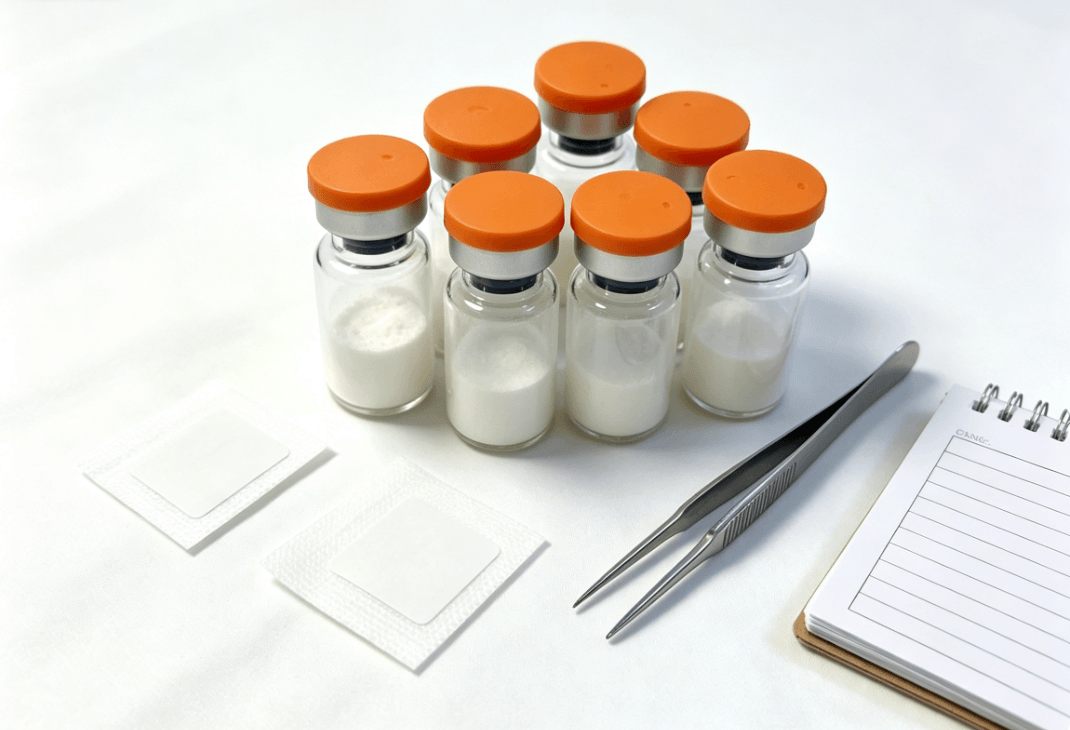
Evaluating Semax and Selank requires understanding their distinct neurochemical targets. Both synthetic neuropeptides originated in Russian pharmacology. However, they serve entirely different cognitive and regulatory functions. Researchers must distinguish their structural stability, molecular mechanisms, and cold-chain handling protocols.
The Pharmacological Divide: Neurochemical Pathways
Semax functions primarily as a neurogenic and cognitive stimulant. It rapidly upregulates Brain-Derived Neurotrophic Factor (BDNF) and modulates central melanocortin receptors. This action enhances neural plasticity, focused attention, and dopaminergic activity. Unlike its parent hormone, it completely bypasses cortisol-releasing mechanisms.
Selank acts as a powerful anxiolytic and neuromodulator. It alters GABA-A receptor affinity without causing traditional sedative side effects. Furthermore, it effectively inhibits enkephalinase enzymes within the brain. This action preserves endogenous enkephalins, reducing stress-induced cognitive impairment and stabilizing mood fluctuations.
Molecular Engineering and Synthesis Constraints
Both compounds share a critical structural modification designed to extend their biological half-life. Semax is an engineered fragment of the ACTH(4-7) sequence. Selank is synthesized from the immunomodulatory tetrapeptide known as tuftsin.
Native peptides degrade rapidly in blood plasma due to enzymatic cleavage. To counter this vulnerability, both molecules feature an added Pro-Gly-Pro sequence at the C-terminus. This structural shield prevents premature degradation by aggressive aminopeptidases.
Commercial manufacturing relies on Solid-Phase Peptide Synthesis (SPPS). This method allows precise amino acid sequencing and high-yield scalability. High-Performance Liquid Chromatography (HPLC) subsequently isolates the target sequence from incomplete synthesis impurities.
Reconstitution, Storage, and Cold-Chain Logistics
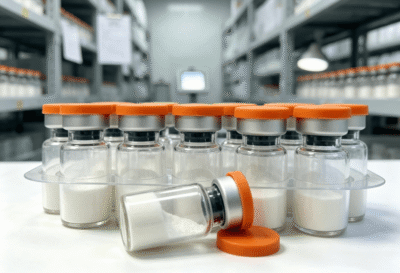
Peptide stability strictly dictates research reliability and experimental outcomes. These compounds are synthesized and shipped exclusively as lyophilized powders. Lyophilization removes internal moisture under a deep vacuum, halting premature chemical degradation. In this solid state, they remain highly stable during standard transit windows.
Before laboratory administration, the raw powder requires precise reconstitution. Bacteriostatic water containing benzyl alcohol is the standard laboratory protocol. Once reconstituted, the fragile peptide bonds become highly vulnerable to rapid hydrolysis.
Reconstituted vials must remain strictly refrigerated between 2°C and 8°C. Exposure to direct UV light or ambient heat rapidly denatures the active pharmaceutical ingredient. Researchers must never aggressively shake the vial during the initial mixing phase.
Material Purity Standards for Laboratory Procurement
Chemical purity directly impacts biological assays and data reproducibility. Contaminants from incomplete synthesis protocols can skew experimental metrics entirely. Procurement teams must rigorously evaluate supplier analytical documentation before any acquisition.
Legitimate synthesis facilities always provide batch-specific Certificates of Analysis. These critical documents must confirm a minimum API purity of 98% via HPLC. Mass Spectrometry data is also required to verify the precise molecular weight.
Scaling laboratory operations requires highly reliable manufacturing partners. Facilities specializing in wholesale peptide synthesis and lyophilized powders provide vital cold-chain logistics. Working directly with capable source factories streamlines procurement and guarantees strict quality control adherence.
Frequently Asked Questions
Can these two peptides be evaluated simultaneously?
Yes, researchers frequently study them together due to their complementary neural mechanisms. Semax addresses neurotrophic deficiencies and dopaminergic signaling. Selank mitigates hyperarousal and stabilizes baseline GABAergic activity.
Why is lyophilization mandatory for bulk transit?
Lyophilization extracts water to prevent hydrolysis and enzymatic breakdown. This solid state protects fragile peptide bonds across varying environmental temperatures. Upon liquid reconstitution, structural degradation accelerates significantly.
How do procurement teams verify raw material quality?
Teams must request third-party analytical documentation for the exact manufactured batch. This includes HPLC results to confirm baseline purity levels. Mass Spectrometry is also necessary to validate the correct molecular sequence.
Reference Literature
Bulletin of Experimental Biology and Medicine: Clinical research evaluating Selank and specific enkephalin-degrading enzymes.
Neuroscience Letters: Laboratory studies regarding the rapid induction of neurotrophin mRNAs by Semax administration.
Behavioural Neurology: Comprehensive clinical analysis of distinct anxiolytic effects observed in chronic stress models.
ACDC Biochemistry Technical Specifications: Manufacturing guidelines and analytical protocols for synthetic neuropeptide stability.

-1-800x800.png)
-800x800.png)
-800x800.png)
-800x800.png)
-800x800.png)
-800x800.png)
-800x800.png)
-800x800.png)
-800x800.png)
-800x800.png)
-800x800.png)
-800x800.png)
-800x800.png)
-800x800.png)
-800x800.png)