


Insulin-like Growth Factor-1 Long Arginine 3 (IGF-1 LR3) represents a significant evolution in the study of polypeptide hormones and cellular signaling. While native IGF-1 is a fundamental driver of growth and development in mammals, its utility in controlled laboratory environments is often limited by a remarkably short half-life and high affinity for inhibitory proteins.
Researchers shifted toward the synthetic analog, IGF-1 LR3, to overcome these physiological constraints. By modifying the molecular structure of the original hormone, scientists have created a tool that maintains potent biological activity while resisting the natural regulatory mechanisms that typically neutralize IGF-1. Understanding the specific structural changes and the resulting pharmacological profile is essential for any study involving cellular proliferation, metabolic pathways, or regenerative medicine.

The Biochemistry of the “Long Arginine 3” Modification
The primary distinction between IGF-1 LR3 and endogenous IGF-1 lies in its amino acid sequence. Native IGF-1 consists of 70 amino acids. In contrast, IGF-1 LR3 is a 83-amino acid analog. This “Long” version includes a 13-amino acid extension at the N-terminus.
The most critical structural change occurs at position 3, where the native Glutamic Acid is replaced by Arginine. This specific substitution (LR3) fundamentally alters the protein’s binding dynamics. While it retains its affinity for the IGF-1 Receptor (IGF-1R), it loses almost all affinity for Insulin-like Growth Factor-Binding Proteins (IGFBPs).
In biological systems, IGFBPs act as “gatekeepers” that regulate the bioavailability of growth factors. Because IGF-1 LR3 does not bind to these proteins, it remains in a “free” or active state in the extracellular environment for a significantly longer duration.
Mechanism of Action: Bypassing Binding Proteins
To understand why IGF-1 LR3 is a preferred reagent in growth factor research, one must examine the role of competitive inhibition. In standard cellular environments, over 99% of native IGF-1 is bound to IGFBPs, which prevents it from interacting with the IGF-1 receptor (IGF-1R).
IGF-1 LR3 bypasses this sequestration. By avoiding the inhibitory proteins, the analog can more effectively trigger the IGF-1R, which initiates a cascade of intracellular signaling pathways:
The PI3K/Akt Pathway: This is the primary pathway for cell survival, protein synthesis, and glucose metabolism.
The MAPK/ERK Pathway: This sequence is vital for gene expression and cellular differentiation.
mTOR Activation: IGF-1 LR3 signaling is a known potent activator of the mechanistic target of rapamycin (mTOR), which is a central regulator of mammalian metabolism and physiology.
The result of this sustained receptor activation is an increased rate of hyperplasia (cell division) and hypertrophy (cell growth) in various tissue types, including skeletal muscle, bone, and connective tissues.
Extended Half-Life and Biological Stability
One of the most notable advantages of IGF-1 LR3 in a research setting is its metabolic stability. Native IGF-1 has a half-life of approximately 10 to 20 minutes in biological systems due to rapid degradation and sequestration.
Through the LR3 modification, the half-life is extended to approximately 20 to 30 hours. For researchers, this means that a single administration or application can provide consistent signaling for an entire day, rather than requiring frequent, repeated dosing to maintain therapeutic levels. This stability is crucial for long-term cell culture studies where maintaining a steady-state environment is necessary for accurate data collection.
Research Applications in Modern Biotechnology
The applications of IGF-1 LR3 span several specialized fields of biological science. Because it is highly effective at promoting protein synthesis and cellular proliferation, it is frequently utilized in:
Myogenesis and Muscle Research: Studying the repair of skeletal muscle tissue and the activation of satellite cells.
Longevity and Anti-Aging Studies: Investigating how growth factor signaling influences cellular senescence and tissue regeneration.
Stem Cell Differentiation: Using the peptide to guide the development of undifferentiated cells into specific lineages.
Metabolic Research: Examining the relationship between growth factors and glucose uptake in insulin-resistant environments.
For laboratory success, the quality of the peptide is paramount. Research-grade IGF-1 LR3 must be verified through High-Performance Liquid Chromatography (HPLC) and Mass Spectrometry (MS) to ensure that the amino acid sequence is correct and that purity levels exceed 98%.
Technical Considerations for Laboratory Use
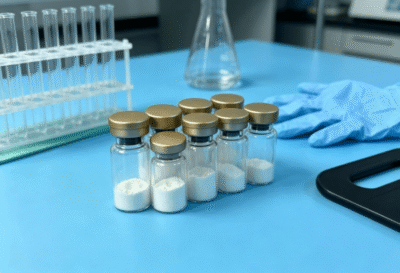
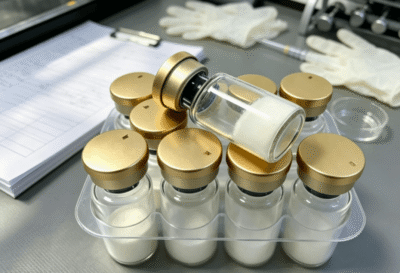
When incorporating IGF-1 LR3 into a research protocol, several technical factors influence the outcome. The peptide is typically provided as a lyophilized (freeze-dried) powder to maintain structural integrity during transit and storage.
Reconstitution: Researchers generally use a sterile buffer, such as 10mM Acetic Acid or 0.1% TFA, to ensure the peptide remains stable in solution.
Storage: Once reconstituted, the peptide is highly sensitive to temperature. It should be stored at 2°C to 8°C for short-term use, or -20°C for long-term stability to prevent proteolysis.
Concentration: Typical research concentrations vary based on the cell line, but consistency in dosing is facilitated by the peptide’s long-acting nature.
Selecting a reliable source for these reagents is a critical step in the procurement process. For instance, peptides available through specialized suppliers are manufactured to meet the rigorous standards required for reproducible results in clinical and pre-clinical research.
Summary of Comparative Dynamics
| Feature | Native IGF-1 | IGF-1 LR3 |
| Amino Acid Count | 70 | 83 |
| Modification | None | Arg3 Substitution |
| IGFBP Affinity | High (Inhibited) | Very Low (Active) |
| Half-Life | 10–20 Minutes | 20–30 Hours |
| Receptor Potency | Standard | Enhanced Bioavailability |
FAQ
What is the “LR3” in IGF-1 LR3?
“LR3” stands for “Long Arginine 3.” The “Long” refers to the additional 13 amino acids at the N-terminus, and “Arginine 3” refers to the substitution of the amino acid at the third position of the chain, which prevents the peptide from being deactivated by binding proteins.
Is IGF-1 LR3 the same as Growth Hormone (GH)?
No. Growth Hormone is produced by the pituitary gland and stimulates the liver to produce IGF-1. IGF-1 LR3 is a direct-acting growth factor that works downstream of GH, interacting directly with the IGF-1 receptors on the surface of cells.
How does IGF-1 LR3 influence protein synthesis?
It stimulates the PI3K/Akt/mTOR pathway. Activation of this pathway increases the rate at which cells translate genetic information into new proteins, promoting the growth and repair of cellular structures.
Why is the half-life of IGF-1 LR3 so much longer than native IGF-1?
The longer half-life is primarily due to the LR3 modification, which prevents the peptide from binding to IGF-binding proteins (IGFBPs). In its free state, it remains active in the system for up to 30 hours, whereas native IGF-1 is quickly neutralized or cleared.
Can IGF-1 LR3 be used for human consumption?
In the context of this discussion and industry standards, IGF-1 LR3 is strictly intended for laboratory research and “in vitro” or “in vivo” animal studies. It is not approved for human clinical use or as a therapeutic drug.
Reference Sources
National Center for Biotechnology Information (NCBI): Structure and function of the insulin-like growth factor-I receptor.
Journal of Biological Chemistry: Analysis of the binding affinity of IGF-1 analogs for IGFBPs.
Endocrine Society: Guidelines on the role of growth factors in metabolic regulation.
American Journal of Physiology: Effects of Long R3 IGF-1 on protein metabolism in skeletal muscle.

-1-800x800.png)
-800x800.png)
-800x800.png)
-800x800.png)
-800x800.png)
-800x800.png)
-800x800.png)
-800x800.png)
-800x800.png)
-800x800.png)
-800x800.png)
-800x800.png)
-800x800.png)
-800x800.png)
-800x800.png)