

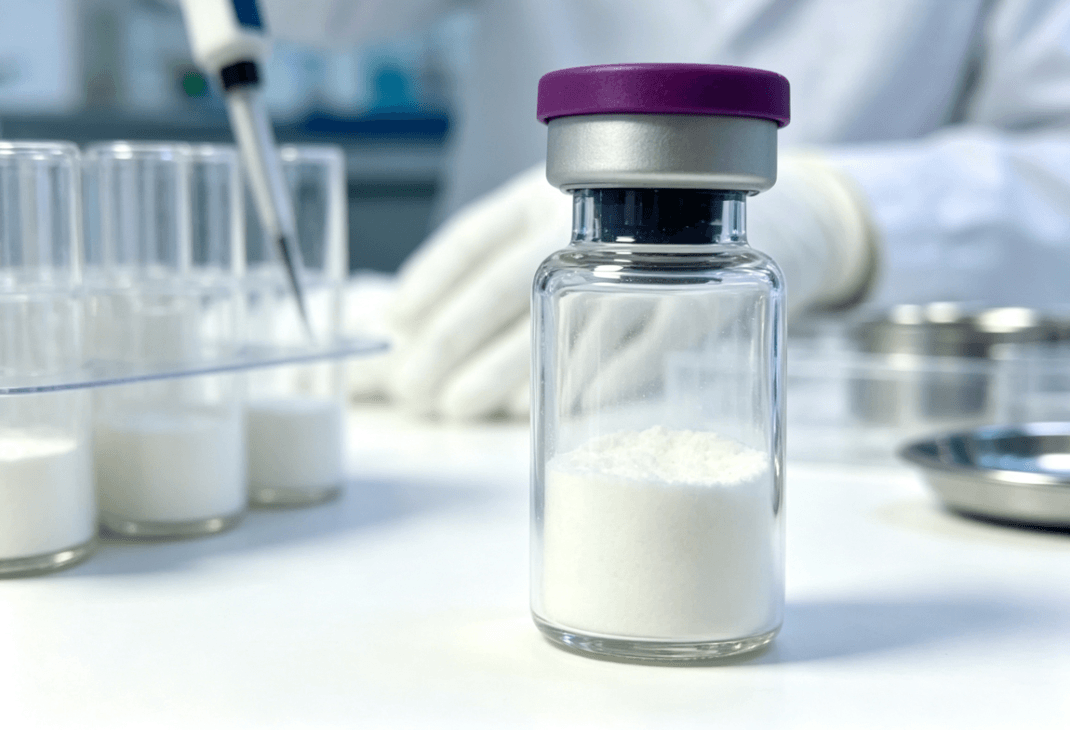
The landscape of metabolic research has shifted significantly with the development of specific signaling molecules known as Growth Hormone Secretagogues (GHS). Among these, the Ipamorelin peptide stands out as one of the most selective and stable compounds in its class. Unlike early-generation analogs, Ipamorelin offers a targeted approach to stimulating the pituitary gland without the broad hormonal fluctuations common in non-selective secretagogues.
Understanding how these compounds function requires a look into the endocrine system’s feedback loops. GHS are small molecules that mimic the action of ghrelin, the “hunger hormone,” by binding to specific receptors. This interaction triggers a pulse of endogenous growth hormone (GH), which is essential for cellular repair, metabolic regulation, and muscle tissue maintenance in various biological models.
What Defines the Ipamorelin Peptide?
Ipamorelin is a pentapeptide, meaning it consists of five amino acids (Aib-His-D-2-Nal-D-Phe-Lys-NH2). It was developed to refine the stimulation of growth hormone release while minimizing side effects. In the hierarchy of GHS, Ipamorelin is categorized as a second or third-generation secretagogue due to its enhanced selectivity.
The primary mechanism of the Ipamorelin peptide involves binding to the Ghrelin Receptor (GHS-R1a) located in the anterior pituitary gland. This binding activates a signaling cascade that prompts somatotropes—the cells responsible for GH production—to release their stores into the bloodstream.
What distinguishes Ipamorelin from its predecessors, such as GHRP-2 or GHRP-6, is its “clean” signaling profile. It does not significantly stimulate the secretion of cortisol or prolactin. This technical precision makes it a preferred subject for researchers focusing on long-term metabolic studies where hormonal stability is a priority.
The Mechanism of Action: GHS-R1a Agonism
Growth Hormone Secretagogues work by bypassing the traditional Growth Hormone Releasing Hormone (GHRH) pathway, though they are often studied in synergy with GHRH analogs. When Ipamorelin enters the system, it suppresses somatostatin—the hormone responsible for inhibiting GH release.
This two-fold action—direct stimulation of the pituitary and the suppression of inhibitors—results in a significant “pulse” of GH. Because Ipamorelin mimics ghrelin so closely, it maintains the natural pulsatile rhythm of GH secretion rather than causing an unnatural, sustained elevation. This mimics the body’s physiological patterns, which is critical for maintaining receptor sensitivity over time.
Comparative Analysis: Ipamorelin vs. Other GHS
Researchers often compare different peptides within the GHS category to determine suitability for specific experimental protocols. The table below outlines the technical differences between common secretagogues.
| Feature | Ipamorelin | GHRP-6 | GHRP-2 |
| Amino Acid Count | 5 (Pentapeptide) | 6 (Hexapeptide) | 6 (Hexapeptide) |
| Selectivity | High (GH only) | Low (Affects Ghrelin) | Moderate |
| Cortisol Impact | Negligible | Significant | Moderate |
| Prolactin Impact | Negligible | Significant | Moderate |
| Primary Use | Selective GH Release | Appetite Stimulation | Potent GH Release |
In laboratory settings, the high selectivity of Ipamorelin allows for more controlled variables. When a study requires the observation of growth hormone effects without the interference of stress hormones (cortisol) or reproductive hormones (prolactin), Ipamorelin is the standard choice.
Key Research Applications and Biological Impact
The study of the Ipamorelin peptide spans several fields of regenerative medicine and endocrinology. Its primary value lies in how it influences body composition and tissue integrity through the IGF-1 (Insulin-like Growth Factor 1) pathway.
1. Bone Mineral Density Research
Ipamorelin has shown promise in studies related to bone health. By stimulating GH, it indirectly promotes osteoblast activity. Research indicates that GHS can help increase bone mineral content, making it a focal point for investigating treatments for osteoporosis or age-related bone degradation.
2. Muscle Tissue Preservation
In catabolic states—where the body breaks down muscle for energy—Ipamorelin helps maintain nitrogen balance. This is vital for research involving sarcopenia (muscle wasting) or recovery after intensive physiological stress.
3. Metabolic Rate and Lipolysis
Growth hormone is a potent regulator of lipid metabolism. The application of Ipamorelin in metabolic research often focuses on its ability to promote lipolysis (fat breakdown) while maintaining glucose stability. Unlike some older secretagogues, it does not typically cause the same degree of insulin resistance.
Technical Handling and Stability in Laboratory Settings
For professionals in the biotech and research sectors, the stability of the peptide is as important as its biological activity. Ipamorelin is typically produced via solid-phase peptide synthesis (SPPS).
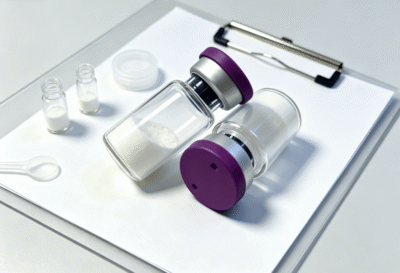
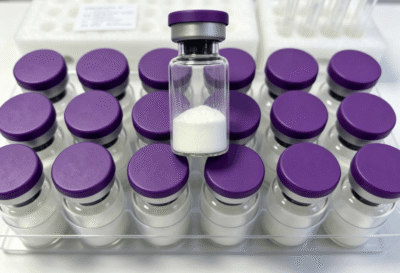
Form: Usually provided as a lyophilized (freeze-dried) white powder.
Storage: Long-term storage requires temperatures of -20°C or below to prevent peptide degradation.
Reconstitution: Researchers use bacteriostatic water or sterile saline. Once reconstituted, the peptide’s shelf life significantly decreases, requiring refrigeration and use within a specific window (typically 2–4 weeks).
Ensuring high purity—often verified via HPLC (High-Performance Liquid Chromatography) and Mass Spectrometry—is essential. Contaminants in the peptide sequence can lead to off-target effects, compromising the validity of research data.
Evaluating Sourcing for Research Integrity
In the B2B and research chemical industry, the quality of the Ipamorelin peptide is non-negotiable. When evaluating laboratory reagents, scientists look for specific quality markers:
Purity Levels: Ideally >98% as determined by HPLC.
Verification: Availability of COA (Certificate of Analysis) for each batch.
Manufacturing Standards: Adherence to strict synthesis protocols to ensure the correct amino acid sequence.
For those managing laboratory inventories or procurement, sourcing from established categories of high-purity peptides ensures that experimental outcomes are reproducible and free from the interference of synthesis byproducts.
Summary of the GHS Landscape
Ipamorelin represents a significant refinement in the evolution of Growth Hormone Secretagogues. Its ability to elicit a potent GH response without the “noise” of ancillary hormone elevation makes it a precision tool in endocrine research. As our understanding of the GHS-R1a receptor deepens, Ipamorelin continues to be the benchmark for selectivity and safety in the study of metabolic and regenerative processes.
FAQ
What is the primary difference between Ipamorelin and CJC-1295?
Ipamorelin is a GHS that mimics ghrelin to stimulate a GH pulse from the pituitary. CJC-1295 is a GHRH (Growth Hormone Releasing Hormone) analog that extends the “bleed” or duration of GH release. They act on different receptors and are often studied together for a synergistic effect.
Does Ipamorelin affect appetite like GHRP-6?
While both bind to the ghrelin receptor, Ipamorelin does not typically cause the intense hunger spike associated with GHRP-6. This makes it more suitable for research where caloric intake needs to remain a controlled variable.
Is Ipamorelin stable at room temperature?
In its lyophilized (powder) form, it is relatively stable for short periods during shipping. However, for long-term integrity, it must be stored in a freezer. Once in liquid form, it is highly sensitive to heat and agitation.
Why is Ipamorelin called a “selective” secretagogue?
It is selective because it specifically targets the growth hormone pathway. Other secretagogues can inadvertently trigger the release of ACTH (which leads to cortisol) and Prolactin, but Ipamorelin’s molecular structure minimizes these interactions.
Reference Sources:
National Center for Biotechnology Information (NCBI): Mechanism of Growth Hormone Secretagogues
Journal of Clinical Endocrinology & Metabolism: The Discovery of Ipamorelin
International Union of Basic and Clinical Pharmacology (IUPHAR): GHS-R1a Receptor Characteristics

-1-800x800.png)
-800x800.png)
-800x800.png)
-800x800.png)
-800x800.png)
-800x800.png)
-800x800.png)
-800x800.png)
-800x800.png)
-800x800.png)
-800x800.png)
-800x800.png)
-800x800.png)
-800x800.png)
-800x800.png)