

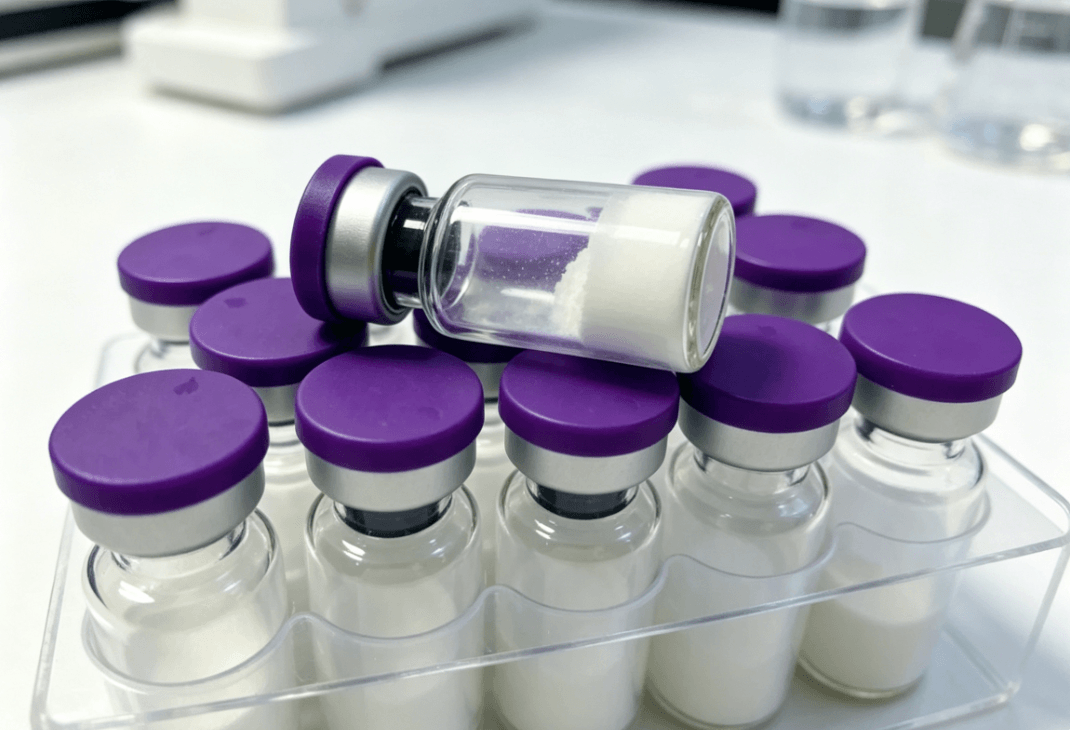
TB500 is a synthetic peptide that has garnered significant attention in the fields of regenerative medicine and molecular biology. While often discussed in the context of tissue recovery, its utility in a laboratory setting extends to complex cellular signaling pathways. As a fractional sequence of the naturally occurring protein Thymosin Beta-4 (Tβ4), TB500 represents a specialized tool for researchers investigating cell migration, wound healing, and vascular development.
Understanding the specific biochemical properties of the TB500 peptide is essential for laboratory professionals and researchers aiming to evaluate its potential in preclinical models. This article examines the structural characteristics, primary mechanisms of action, and the diverse research applications that define this molecule’s role in modern science.
What is TB500 Peptide?
TB500 is a synthetic peptide consisting of a 17-amino acid sequence (7–23) of the endogenous protein Thymosin Beta-4. While the full Tβ4 protein contains 43 amino acids, research has identified that its regenerative and migratory properties are largely concentrated within this specific fragment.
In biological systems, Thymosin Beta-4 is one of the most abundant G-actin sequestering molecules. It is found in high concentrations in blood platelets, macrophages, and other cell types involved in the initial response to tissue injury. TB500 is utilized in research specifically because it is easier to synthesize and possesses high bioavailability, allowing for the observation of localized and systemic effects in experimental models without the structural complexity of the full-length protein.
The Molecular Mechanism: How TB500 Influences Cellular Dynamics
The primary functionality of TB500 revolves around its interaction with actin, a vital protein involved in cell structure and movement. To understand how TB500 works, one must look at its role in the actin cytoskeleton.
1. Actin Sequestration and Cytoskeletal Reorganization
The hallmark of TB500’s mechanism is its ability to bind to G-actin (monomeric actin). By sequestering G-actin, TB500 prevents its polymerization into F-actin (filamentous actin). This regulation is critical because the balance between G-actin and F-actin determines a cell’s ability to change shape, move, and divide. In research environments, this mechanism is studied to understand how cells “crawl” to the site of an injury—a process known as chemotaxis.
2. Promotion of Angiogenesis
Angiogenesis, or the formation of new blood vessels from pre-existing ones, is a complex process involving endothelial cell migration and proliferation. Research suggests that TB500 upregulates the expression of Vascular Endothelial Growth Factor (VEGF). By stimulating the migration of endothelial cells, TB500 helps create the vascular “scaffolding” necessary for oxygen and nutrient delivery to regenerating tissues.
3. Modulation of Inflammatory Cytokines
TB500 does not simply promote growth; it also appears to influence the inflammatory environment. Studies indicate that it may lower the levels of pro-inflammatory cytokines, such as certain interleukins. For researchers, this makes TB500 a subject of interest in studying chronic inflammatory conditions where the natural healing process has stalled.
Primary Research Applications of TB500
Due to its versatile impact on cellular behavior, the TB500 peptide is utilized across several distinct research disciplines.
| Research Area | Primary Focus | Mechanism Involved |
| Wound Healing | Dermal and epithelial repair | Keratinocyte migration and collagen deposition |
| Cardiology | Myocardial infarction recovery | Post-ischemic vessel growth and cell survival |
| Sports Medicine | Tendon and ligament repair | Fibroblast activity and tensile strength analysis |
| Ophthalmology | Corneal repair | Epithelial cell migration in ocular injury models |
Tissue Repair and Fibrosis Research
In musculoskeletal research, TB500 is frequently studied for its role in tendon and ligament healing. Unlike muscle tissue, tendons have poor blood supply, making their recovery slow. Researchers use TB500 to observe whether increased actin-mediated cell migration can accelerate the arrival of fibroblasts to the injury site, potentially reducing the formation of restrictive scar tissue (fibrosis).
Cardiovascular Research
Some of the most compelling data regarding TB500 comes from cardiovascular studies. In models of myocardial ischemia, researchers have observed that Thymosin-based peptides can promote the survival of cardiomyocytes and stimulate the growth of new collateral vessels. This research is pivotal for understanding how to limit “remodeling”—the often-damaging structural changes the heart undergoes after a cardiac event.
Structural Comparison: TB500 vs. Thymosin Beta-4
It is common for those new to the field to confuse the synthetic peptide with the parent protein. However, the distinction is important for experimental accuracy.
Thymosin Beta-4 (Tβ4): The full 43-amino acid protein. It is involved in a wider array of biological processes, including some nuclear functions.
TB500: A 17-amino acid fragment (Ac-Ser-Asp-Lys-Pro-Asp-Met-Ala-Glu-Ile-Glu-Lys-Phe-Asp-Lys-Ser-Lys-Leu-NH2). It is highly mobile and focuses specifically on the actin-binding and migratory functions.
For laboratory applications, TB500 is often preferred when the objective is to isolate the effects of actin sequestration and cell migration without the potential interference of other domains found in the full-length protein. High-purity analogs are essential for these studies; for instance, specialized suppliers like ACDC Source provide research-grade peptides that ensure consistent molecular weight and sequence integrity, which are vital for reproducible data.
Research Considerations and Limitations
When designing a study involving TB500, researchers must account for several variables:
Half-Life: Peptides are naturally prone to rapid degradation by proteases. Research protocols must often account for the relatively short half-life of TB500 in vivo.
Dosage Specificity: Preclinical models show that the effects of TB500 may follow a bell-shaped curve, where optimal cellular migration occurs only within a specific concentration range.
Regulatory Status: It is critical to note that TB500 is currently classified as a “research chemical.” It is not approved for human or veterinary consumption by the FDA or EMA. Its use is strictly limited to in-vitro and in-vivo laboratory experimentation.
Conclusion
The TB500 peptide remains a cornerstone of research into cellular motility and regenerative signaling. Its unique ability to govern actin dynamics offers a window into the body’s most fundamental repair mechanisms. As researchers continue to map the pathways of angiogenesis and tissue remodeling, TB500 provides a high-affinity, targeted tool for unlocking the complexities of biological recovery.
For institutions looking to advance their research, sourcing high-purity peptides is the first step toward achieving statistically significant and peer-review-ready results.
FAQ: Common Research Inquiries Regarding TB500
What is the purity requirement for TB500 in laboratory research?
For most analytical and preclinical research, a purity of ≥98% is the industry standard. This ensures that the biological responses observed are due to the peptide itself and not to residual reagents or truncated sequences.
How is TB500 typically stored in a lab setting?
TB500 is usually provided as a lyophilized (freeze-dried) powder. It should be stored at -20°C for long-term stability. Once reconstituted in sterile water or bacteriostatic water, it should be kept at 4°C and used within a short timeframe to avoid degradation.
Can TB500 be detected in biological assays?
Yes, researchers typically use HPLC (High-Performance Liquid Chromatography) or LC-MS (Liquid Chromatography-Mass Spectrometry) to verify the presence, concentration, and stability of TB500 in various experimental mediums.
Is TB500 the same as BPC-157?
No. While both are studied for tissue repair, they are entirely different molecules. TB500 is a segment of Thymosin Beta-4 and works primarily through actin sequestration. BPC-157 is a pentadecapeptide derived from a gastric protein and works through different pathways, including the nitric oxide system and growth factor expression.
Reference Sources
National Center for Biotechnology Information (NCBI):Structure and function of Thymosin Beta-4 in tissue repair.
Journal of Biological Chemistry: Mechanics of G-actin binding and the role of Tβ4 analogs.
Expert Opinion on Biological Therapy: Clinical potential of Thymosin Beta-4 and its fragments in regenerative medicine.
ACDC Source Product Catalog:Specification and analysis data for research-grade peptides.

-1-800x800.png)
-800x800.png)
-800x800.png)
-800x800.png)
-800x800.png)
-800x800.png)
-800x800.png)
-800x800.png)
-800x800.png)
-800x800.png)
-800x800.png)
-800x800.png)
-800x800.png)
-800x800.png)
-800x800.png)