

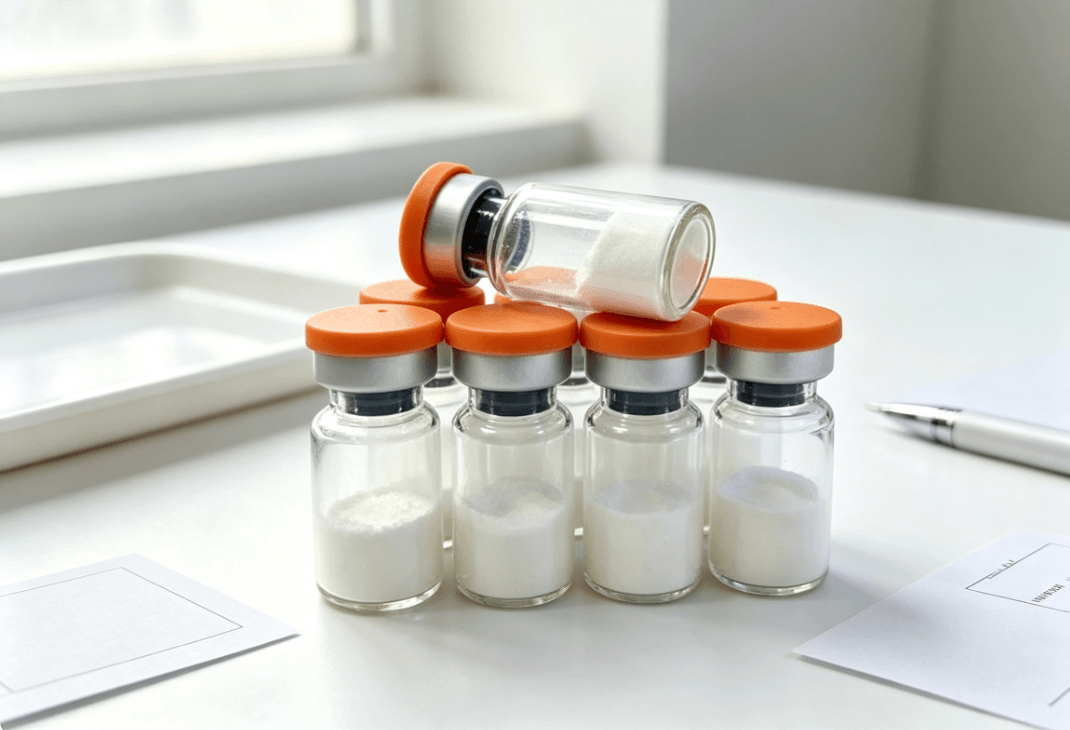
Procuring high-purity metabolic compounds requires strict quality oversight. Laboratories evaluating these materials must prioritize batch consistency and precise molecular sequencing. Minor impurities can heavily skew experimental data in preclinical models.
This guide breaks down the procurement logic for laboratory managers and B2B buyers. We will cover manufacturing standards, stability considerations, and supplier evaluation criteria. Understanding these variables ensures a more resilient supply chain.
Navigating the landscape of GLP-1 research peptides demands technical scrutiny. Sourcing professionals must look beyond pricing to evaluate analytical transparency. Partnering with capable source factories minimizes delays and standardizes testing results.
What Defines High-Quality GLP-1 Research Peptides?
High-grade compounds rely on precise manufacturing protocols. Variations in amino acid sequences can drastically alter receptor binding affinity. Laboratories must demand rigorous documentation for every batch.
Several technical parameters dictate the suitability of these materials for research:
Purity Levels: In vitro applications typically require >99% purity verified by analytical HPLC.
Mass Accuracy: Mass Spectrometry (MS) must confirm the exact molecular weight.
Moisture Content: Lyophilized powders need strict moisture control to prevent rapid degradation.
TFA Salts: Cellular assays often require specific salt modifications to prevent toxicity.
Endotoxin Limits: Crucial for in vivo preclinical models to avoid unintended inflammatory responses.
Failure to verify these parameters leads to compromised assay reliability. Procurement teams must request independent testing data before initiating bulk orders.
Evaluating Key Analogues for Laboratory Models
Metabolic research has moved beyond single-receptor agonists. Modern studies often utilize dual or triple-receptor targeting. Selecting the right sequence depends on the specific biological model being evaluated.
Researchers frequently compare different molecular structures to understand binding affinities. Each structural modification impacts the half-life and stability of the compound.
| Peptide Type | Receptor Targets | Common Laboratory Applications |
| Semaglutide | GLP-1 | Baseline metabolic modeling and glucose regulation studies |
| Tirzepatide | GLP-1 / GIP | Dual-agonist research for advanced lipid metabolism |
| Mazdutide | GLP-1 / GCGR | Glucagon receptor studies and hepatic fat research |
| Survodutide | GLP-1 / Glucagon | Dual-agonist modeling for energy expenditure studies |
Each compound requires specific handling protocols to maintain structural integrity. Procurement teams must align their purchasing strategy with the specific phase of their research trial.
Solid-Phase Peptide Synthesis (SPPS) Constraints
Commercial peptide production generally relies on Solid-Phase Peptide Synthesis (SPPS). This automated method allows for precise amino acid chain elongation. However, synthesizing longer molecular chains introduces specific manufacturing challenges.
Aggregation during synthesis can reduce the overall yield. In large-volume production, incomplete deprotection may result in truncated sequences. Manufacturers must implement rigorous cleavage steps to isolate the target molecule.
Purification heavily relies on preparative reverse-phase HPLC. Isolating highly hydrophobic sequences requires advanced column technology and optimized solvent gradients. These purification constraints directly impact lead times and production costs.
Reconstitution Protocols and Cold Chain Logistics
Proper handling after delivery dictates research accuracy. Even the highest purity compounds degrade if mishandled during preparation. Laboratories must establish strict standard operating procedures.
Manufacturers supply these compounds as lyophilized powders. This freeze-dried state protects the molecular structure from rapid thermal degradation. Insulated packaging and cold-chain logistics are often necessary to maintain structural integrity during transit.
Upon arrival, immediate transfer to a -20°C freezer is mandatory. Reconstitution introduces new stability variables requiring careful buffer selection. Bacteriostatic water or sterile saline are common choices for metabolic compounds.
Avoid aggressive agitation during the mixing process. Gentle swirling prevents mechanical shearing of the molecular structure. Once reconstituted, solutions should be used rapidly or aliquoted to avoid repeated freeze-thaw cycles.
B2B Sourcing: Evaluating Peptide Manufacturers
Transitioning from pilot studies to large-scale research requires a reliable supply chain. Lab procurement teams must evaluate manufacturers based on analytical transparency and scalability. A robust supplier evaluation workflow mitigates operational risk.
Request complete Certificates of Analysis (CoA) before bulk purchasing. The CoA must include recent HPLC chromatograms and MS testing data. Discrepancies in testing dates can indicate older, potentially degraded inventory.
Production capacity is another critical metric. Laboratories often start with 5mg or 10mg vials for initial sequence screening. As projects expand, suppliers must demonstrate the capability to scale without compromising purity.
Integrating Direct Source Factory Capabilities
Working directly with source factories eliminates intermediary supply chain delays. Facilities with integrated R&D can better support custom synthesis requirements. This direct model provides laboratories with reliable quality control and streamlined RFQ workflows.
When evaluating vendors, production flexibility is highly advantageous. For example, ACDC Biochemistry operates as a specialized manufacturer for laboratory compounds. They supply high-purity GLP-1 research peptides in lyophilized formats.
Their catalog includes advanced sequences like Mazdutide (IBI-362), Survodutide, Semaglutide, and Tirzepatide. Based in Shenzhen, their infrastructure supports scaling from gram-level trial batches to ton-level industrial production. Partnering with manufacturers that maintain domestic university collaborations ensures access to modern synthesis methodologies.
Frequently Asked Questions (FAQ)
What is the standard MOQ for custom peptide synthesis?
Minimum order quantities vary by supplier and sequence complexity. Many source factories accommodate 1-gram pilot batches before scaling up to larger industrial volumes.
How should lyophilized peptides be stored upon receipt?
Store them immediately at -20°C in a dry, dark environment. Keep vials sealed until reconstitution to prevent moisture absorption and structural degradation.
What documentation is required during the B2B RFQ process?
Buyers should request a standardized CoA, HPLC chromatograms, and MS reports. These documents verify sequence accuracy, overall purity, and structural integrity.
How long does bulk synthesis typically take?
Standard catalog inventory usually ships immediately. Custom sequence synthesis generally requires 2 to 4 weeks, depending on chain length and purification complexity.
Why is preparative HPLC necessary for manufacturing?
Preparative HPLC removes truncated sequences and synthesis byproducts. This ensures the final product meets the >99% purity threshold required for sensitive laboratory applications.
Reference Sources
USP (United States Pharmacopeia): General Chapter <1503> Quality Attributes of Synthetic Peptides.
FDA (Food and Drug Administration): Clinical Pharmacology Considerations for Peptide Drug Products.
ISO 9001:2015: Quality management systems for chemical and pharmaceutical manufacturing.
ASTM International: Standard Guide for Characterization and Testing of Biomaterials.

-1-800x800.png)
-800x800.png)
-800x800.png)
-800x800.png)
-800x800.png)
-800x800.png)
-800x800.png)
-800x800.png)
-800x800.png)
-800x800.png)
-800x800.png)
-800x800.png)
-800x800.png)
-800x800.png)
-800x800.png)