

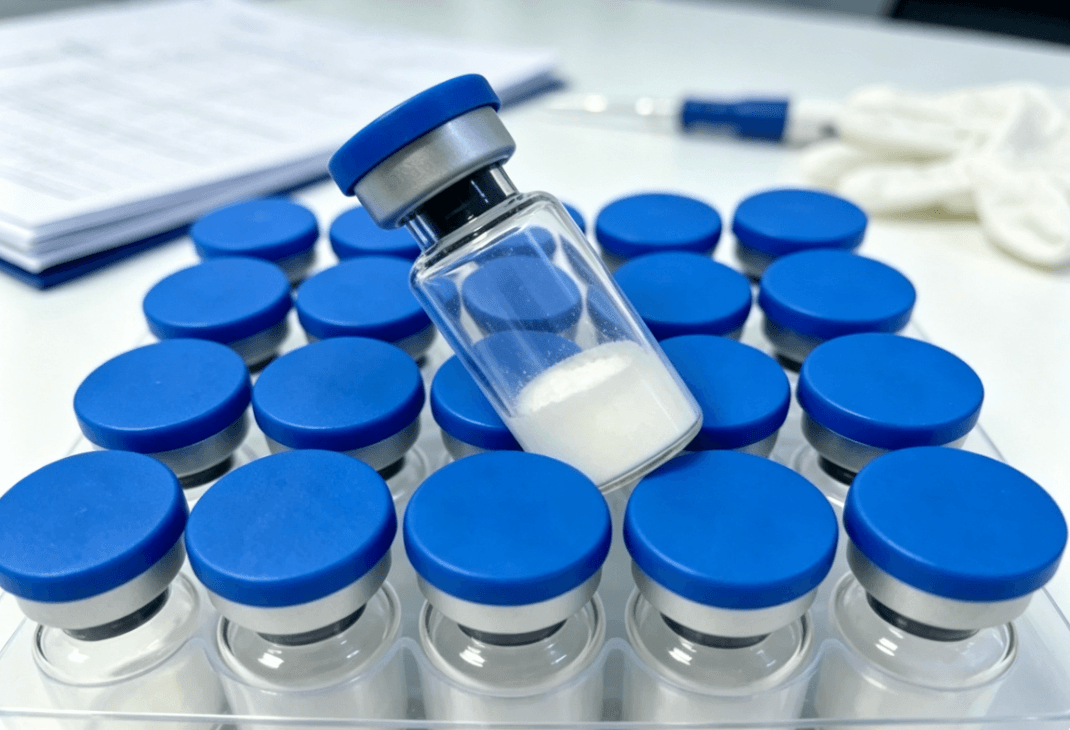
Growth Hormone Releasing Peptides (GHRPs) represent a specific class of synthetic hexapeptides designed to stimulate the endogenous release of growth hormone (GH). While both GHRP-2 and GHRP-6 belong to the same family of ghrelin mimetics, their physiological impact varies significantly. Researchers often evaluate these two compounds based on their potency, selectivity, and secondary effects on hormones like cortisol and prolactin.
Understanding the Mechanism: Ghrelin Receptor Activation
Both GHRP-2 and GHRP-6 function by binding to the Growth Hormone Secretagogue Receptor (GHS-R1a) located in the pituitary gland and hypothalamus. This binding triggers a signal transduction pathway that bypasses the inhibitory effects of somatostatin. By mimicking the natural hunger hormone, ghrelin, these peptides amplify the pulsatile release of GH.
The primary difference lies in how these peptides interact with the receptor. GHRP-6 is a first-generation secretagogue. GHRP-2, or Pralmorelin, is a second-generation analog designed for higher efficiency.
GHRP-2 vs GHRP-6: Core Technical Differences
When comparing GHRP-2 vs GHRP-6, several biological markers distinguish their performance in a laboratory setting.
| Feature | GHRP-6 | GHRP-2 |
| Generation | First-Generation | Second-Generation |
| GH Release Potency | Moderate | High (2-3x more potent) |
| Appetite Stimulation | Intense (Strong Ghrelin effect) | Mild to Moderate |
| Cortisol/Prolactin Elevation | Low | Moderate (at higher doses) |
| Selectivity | High for GHS-R1a | High, but less selective for GH alone |
Biological Potency and GH Secretion
GHRP-2 is objectively more potent in terms of total growth hormone output. Studies indicate that GHRP-2 can stimulate the pituitary to release significantly higher levels of GH compared to an equal dose of GHRP-6. For research requiring maximum GH elevation without the need for high caloric intake, GHRP-2 is often the preferred choice.
The Appetite Stimulation Factor
One of the most notable differences in the GHRP-2 vs GHRP-6 comparison is the effect on hunger. GHRP-6 possesses a much stronger affinity for the pathways that signal satiety. It triggers a significant increase in hunger shortly after administration. This makes GHRP-6 useful in research models focused on wasting syndromes or weight gain. Conversely, GHRP-2 provides the GH spike with much more manageable increases in appetite.
Secondary Hormonal Impact: Cortisol and Prolactin
In high-precision research, the “cleanliness” of a peptide is vital. A common concern with GHRPs is their potential to stimulate non-target hormones.
GHRP-6 is remarkably selective. It rarely increases cortisol or prolactin levels within standard dosing ranges.
GHRP-2 is slightly less selective at higher dosages. It can cause a measurable increase in both cortisol (the stress hormone) and prolactin.
Researchers must balance the desire for higher GH potency (GHRP-2) against the risk of altering these secondary hormonal baselines.
Application Logic in Laboratory Environments
The choice between these two peptides depends on the specific goals of the study.
When to choose GHRP-6:
Research involving cachexia or unintended weight loss.
Studies where intense appetite stimulation is a required variable.
Protocols requiring the lowest possible impact on cortisol and prolactin.
When to choose GHRP-2:
Studies prioritizing maximum endogenous GH production.
Research focused on lean body mass where excessive hunger would interfere with data.
Models investigating the effects of second-generation secretagogues on pituitary fatigue.
Purity and Manufacturing Standards for Research
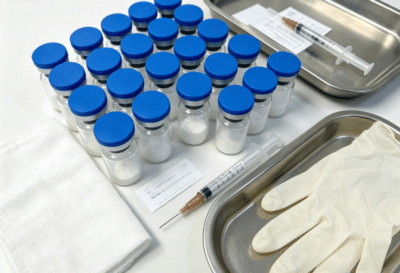
For experimental results to be reproducible, the chemical integrity of the peptide is paramount. In the biotech industry, GHRPs are synthesized using Solid Phase Peptide Synthesis (SPPS).
High-quality research peptides should meet a purity threshold of 98% or higher, verified via High-Performance Liquid Chromatography (HPLC) and Mass Spectrometry (MS). Impurities in the peptide sequence can lead to unpredictable receptor binding, potentially skewing data regarding GH pulse frequency or amplitude.
When sourcing these compounds, researchers should ensure the lyophilized powder is stored in a temperature-controlled environment. Exposure to heat or UV light can degrade the delicate peptide bonds, rendering the comparison between GHRP-2 and GHRP-6 invalid due to loss of bioactivity.
FAQ
Which is better for GH release, GHRP-2 or GHRP-6?
Technically, GHRP-2 is the more potent stimulator of growth hormone. It consistently produces a higher peak in GH levels compared to GHRP-6 at equivalent dosages.
Does GHRP-2 cause the same “hunger pangs” as GHRP-6?
No. While GHRP-2 can increase appetite, it is significantly less intense than GHRP-6. GHRP-6 is known for a rapid and potent activation of the gastric ghrelin pathways.
Can these peptides be used together?
In some research protocols, secretagogues are combined to maximize the GH pulse. However, because they compete for the same GHS-R1a receptor, the results are often additive rather than synergistic.
What is the stability of these peptides after reconstitution?
Once reconstituted with bacteriostatic water, both GHRP-2 and GHRP-6 are highly sensitive to temperature. They should be refrigerated and typically remain stable for 3–4 weeks.
Why does GHRP-2 increase cortisol?
At higher concentrations, GHRP-2 loses some of its selectivity. This allows it to stimulate the ACTH (Adrenocorticotropic hormone) pathway, which subsequently increases cortisol production from the adrenal glands.
Reference Sources
National Center for Biotechnology Information (NCBI): Comparative study on the GH-releasing activity of GHRP-2 and GHRP-6.
The Journal of Clinical Endocrinology & Metabolism: Clinical evaluation of Growth Hormone Secretagogues in humans.
SGS Biological Testing Standards: Guidelines for peptide purity and HPLC verification in laboratory reagents.
Endocrine Society: Technical briefs on the GHS-R1a receptor and ghrelin mimetics.

-1-800x800.png)
-800x800.png)
-800x800.png)
-800x800.png)
-800x800.png)
-800x800.png)
-800x800.png)
-800x800.png)
-800x800.png)
-800x800.png)
-800x800.png)
-800x800.png)
-800x800.png)
-800x800.png)
-800x800.png)