

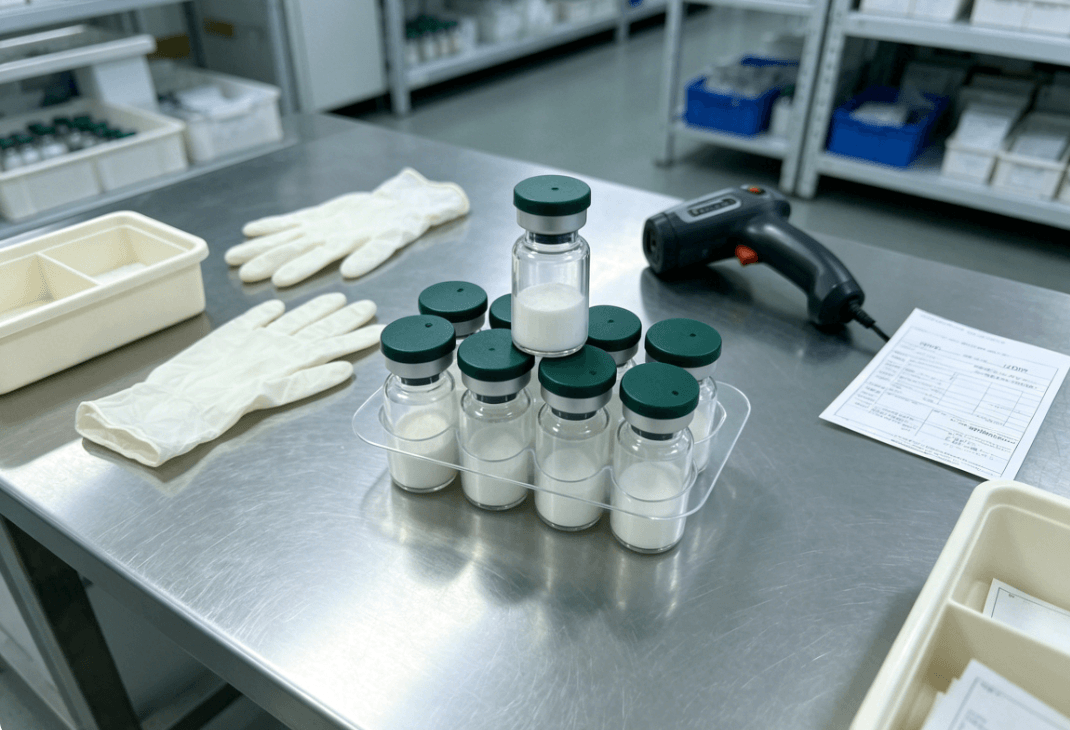
Glucagon-like peptide-1 (GLP-1) represents a critical frontier in metabolic and endocrine research. As an incretin hormone derived from the proglucagon gene, these peptides play a fundamental role in glucose homeostasis and systemic metabolic regulation. For researchers in biochemistry, pharmacology, and metabolic biology, understanding the structural nuances and functional pathways of GLP-1 peptides is essential for designing robust in vitro and in vivo models.
This guide provides a technical overview of GLP-1 peptides, their synthesis standards, and their evolving role in experimental science.
The Biological Mechanism of GLP-1 Peptides
GLP-1 is a 30- or 31-amino acid peptide secreted primarily by the L-cells of the distal ileum and colon. In a physiological context, the peptide acts through the GLP-1 receptor (GLP-1R), a G protein-coupled receptor (GPCR) found in the pancreas, brain, heart, and gastrointestinal tract.
When a GLP-1 peptide binds to its receptor, it triggers a cascade of intracellular events:
Adenylate Cyclase Activation: Leads to increased levels of cyclic adenosine monophosphate (cAMP).
Insulin Synthesis: Stimulates glucose-dependent insulin secretion from pancreatic beta cells.
Glucagon Suppression: Inhibits alpha cells from releasing glucagon, effectively lowering hepatic glucose production.
Gastric Emptying: Modulates the rate of nutrient absorption by slowing gastric motility.
In research settings, scientists utilize synthetic GLP-1 analogues to study these pathways without the rapid degradation caused by the enzyme dipeptidyl peptidase-4 (DPP-4), which typically cleaves natural GLP-1 within minutes.
Key Variants in GLP-1 Peptide Research
While the native GLP-1 sequence provides the foundation, modern research often focuses on modified analogues designed for increased stability and potency. Researchers categorize these based on their structural modifications and receptor affinity.
| Peptide Type | Primary Research Focus | Key Structural Feature |
| Native GLP-1 (7-36) | Baseline metabolic signaling | High affinity, very short half-life |
| Semaglutide Sequence | Long-term metabolic studies | C18 fatty diacid side chain; DPP-4 resistance |
| Liraglutide Sequence | Short-term receptor agonism | Fatty acid acylation (C16) |
| Tirzepatide (Dual Agonist) | GIP/GLP-1 synergistic effects | Integrated GIP and GLP-1 receptor affinity |
Each variant allows researchers to isolate specific physiological responses. For example, acylated peptides are often preferred for studies requiring extended observation periods due to their ability to bind to albumin and resist enzymatic breakdown.
Technical Quality Standards for Laboratory Peptides
In a laboratory environment, the validity of experimental data depends entirely on the purity and stability of the peptide. Substandard materials can lead to receptor binding inconsistencies or unexpected cellular toxicity.
Purity Requirements
For most peer-reviewed research, a purity level of ≥98% is the industry standard. This is typically verified through:
High-Performance Liquid Chromatography (HPLC): Confirms the absence of truncated sequences or chemical impurities.
Mass Spectrometry (MS): Validates the exact molecular weight and amino acid composition.
Physical State and Storage
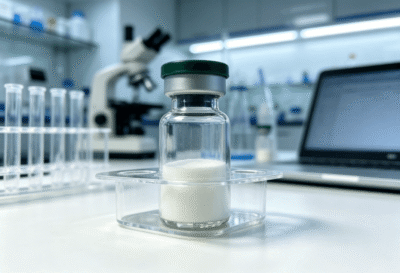
GLP-1 peptides are commonly supplied in a lyophilized (freeze-dried) powder state. This format ensures long-term stability by removing moisture that could lead to peptide hydrolysis.
Storage: Lyophilized peptides should be stored at -20°C.
Reconstitution: Once reconstituted in a sterile buffer (such as PBS or bacteriostatic water), the peptide’s stability significantly decreases, often requiring use within days or weeks if kept at 4°C.
Strategic Research Applications
The scope of GLP-1 research has expanded far beyond simple glycemic control. Current scientific inquiries are exploring the “pleiotropic effects” of these peptides across multiple systems.
Neuroprotective Research
GLP-1 receptors are expressed in the central nervous system, particularly in the hypothalamus and hippocampus. Research is currently investigating how GLP-1 peptides influence neuroinflammation, synaptic plasticity, and neuronal apoptosis. This has made them a focal point in studies regarding neurodegenerative pathologies.
Cardiovascular and Renal Studies
In laboratory models, GLP-1 agonism has shown influence over endothelial function and sodium excretion in the kidneys. Researchers use high-purity peptides to map how these hormones interact with blood pressure regulation and renal oxidative stress.
Weight Regulation and Lipid Metabolism
Beyond insulin, GLP-1 peptides influence satiety centers in the brain. Investigating the signaling between the gut-brain axis allows scientists to understand the mechanisms of energy expenditure and adipose tissue thermogenesis.
Sourcing GLP-1 Peptides for Experimental Use
When selecting materials for scientific inquiry, researchers must distinguish between clinical-grade medications and Research Use Only (RUO) peptides. Organizations like ACDC Source provide specialized peptide sequences tailored for laboratory environments where precise concentration and high-purity lyophilized forms are required.
The transition from “bench to bedside” requires that the initial “bench” phase uses materials that are free from additives commonly found in commercial injectors. For researchers, utilizing pure acetate salts or TFA salts of GLP-1 ensures that observed biological effects are due to the peptide itself, not the delivery vehicle or preservatives.
FAQ: Common Questions in GLP-1 Research
1. What is the difference between GLP-1 (7-36) and GLP-1 (1-37)?
GLP-1 (7-36) amide is the most common biologically active form in humans. The (1-37) form is a precursor that is significantly less potent in stimulating insulin secretion. Most research focuses on the truncated (7-36) or (7-37) sequences.
2. Why must GLP-1 peptides be protected from DPP-4?
Dipeptidyl peptidase-4 (DPP-4) is an enzyme that rapidly cleaves the two N-terminal amino acids of native GLP-1, rendering it inactive. In research, this is managed by either using DPP-4 inhibitors in the medium or utilizing synthetic analogues with amino acid substitutions (like aminoisobutyric acid) that prevent enzyme recognition.
3. How should I calculate the concentration for in vitro assays?
Concentration is typically calculated based on the net peptide content. It is important to note that the gross weight of the lyophilized powder includes residual salts (like acetate) and water. Researchers should refer to the Certificate of Analysis (CoA) for the net peptide fraction to ensure molar accuracy.
4. Can GLP-1 peptides be used for oral delivery research?
Native GLP-1 is highly susceptible to proteolytic degradation in the stomach. Research into oral delivery usually involves the use of permeation enhancers (like SNAC) or encapsulation technologies to bypass the acidic environment of the gastrointestinal tract.
5. What are the signs of peptide degradation?
Visual changes, such as the powder turning “clumpy” or yellowed, indicate moisture infiltration. In solution, the appearance of precipitates or a decrease in baseline results in assays can suggest that the peptide has aggregated or hydrolyzed.
Reference Sources
National Center for Biotechnology Information (NCBI): Incretin Hormones and Their Role in Metabolic Homeostasis
Journal of Biological Chemistry: Structural Basis of GLP-1 Receptor Activation
IUPHAR/BPS Guide to Pharmacology: Glucagon-like peptide 1 (GLP-1) receptor profile
American Diabetes Association (ADA): Technical Review of Incretin-Based Research

-1-800x800.png)
-800x800.png)
-800x800.png)
-800x800.png)
-800x800.png)
-800x800.png)
-800x800.png)
-800x800.png)
-800x800.png)
-800x800.png)
-800x800.png)
-800x800.png)
-800x800.png)
-800x800.png)
-800x800.png)