

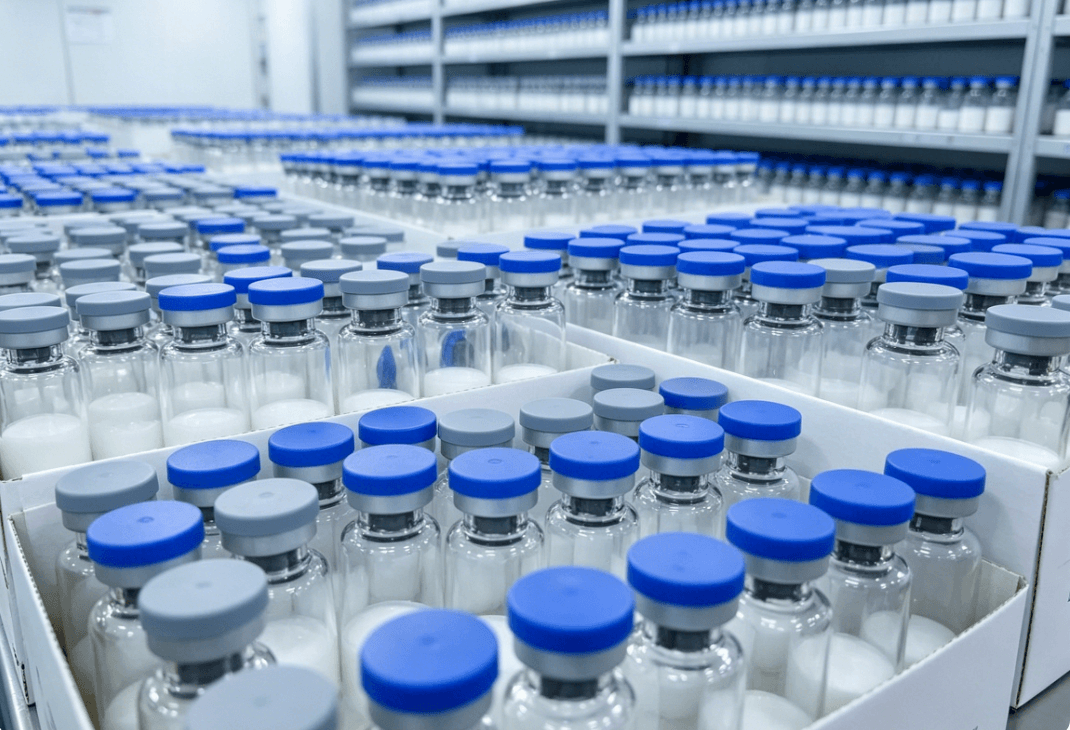
The landscape of metabolic research has been fundamentally altered by the emergence of long-acting GLP-1 (Glucagon-like peptide-1) receptor agonists. Among these, semaglutide stands out as a primary subject of study for its profound impact on appetite regulation and glucose homeostasis.
For researchers and laboratory professionals, understanding the biochemical nuances of this peptide is essential. It is not merely a tool for glycemic control but a complex molecule engineered for high stability and specific receptor affinity.
The Biochemical Architecture of Semaglutide
Semaglutide is a synthetic analog of the human incretin hormone GLP-1. While endogenous GLP-1 has a half-life of roughly two minutes due to rapid degradation by the enzyme dipeptidyl peptidase-4 (DPP-4), semaglutide is engineered for longevity.
The molecular structure features three critical modifications:
- Amino Acid Substitution: A substitution at position 8 (alanine to alpha-aminoisobutyric acid) protects the peptide from DPP-4 cleavage.
- Acylation: The addition of a C-18 fatty diacid chain at position 26 facilitates strong binding to albumin.
- Spacer Integration: A specialized spacer ensures the fatty acid chain does not interfere with receptor binding.
These modifications extend the half-life to approximately 165 hours. In a research setting, this allows for stable plasma concentrations, making it a reliable candidate for long-term metabolic studies.
How Semaglutide Functions in Weight Management Research
The efficacy of semaglutide in weight-related research stems from its “dual-pathway” interaction. It mimics natural hormones but operates with higher potency and duration.
1. Hypothalamic Signaling and Satiety
Semaglutide crosses the blood-brain barrier and acts directly on the arcuate nucleus of the hypothalamus. Research indicates that it activates POMC (pro-opiomelanocortin) neurons while inhibiting NPY/AgRP (neuropeptide Y/Agouti-related peptide) neurons. This shift signals a state of energy surfeit, reducing the “reward” response to food and lowering the biological set-point for hunger.
2. Gastric Kinetic Modulation
Beyond the central nervous system, semaglutide influences the gastrointestinal tract. It induces a significant delay in gastric emptying. By slowing the transit of nutrients from the stomach to the small intestine, the peptide extends post-prandial fullness. In research models, this provides insights into how gastric motility contributes to overall caloric intake.
3. Adipose Tissue and Lipid Metabolism
Emerging studies suggest that semaglutide may influence white adipose tissue (WAT) browning. By modulating thermogenesis and lipid oxidation, researchers are investigating whether the peptide can improve metabolic flexibility at the cellular level.
Research Applications: Comparative Analysis
When designing protocols, it is vital to distinguish semaglutide from other incretins like Liraglutide or Tirzepatide.
| Feature | Semaglutide | Liraglutide |
| Homology to Human GLP-1 | 94% | 97% |
| Half-Life | ~165 Hours | ~13 Hours |
| Administration in Research | Once Weekly | Once Daily |
| Primary Mechanism | High GLP-1 Selectivity | GLP-1 Receptor Agonism |
For laboratory environments focusing on chronic metabolic syndromes, semaglutide’s long-acting nature reduces the frequency of administration. This minimizes stress on animal models and reduces variables associated with fluctuating peptide levels.
Why Synthesis Quality Dictates Research Outcomes
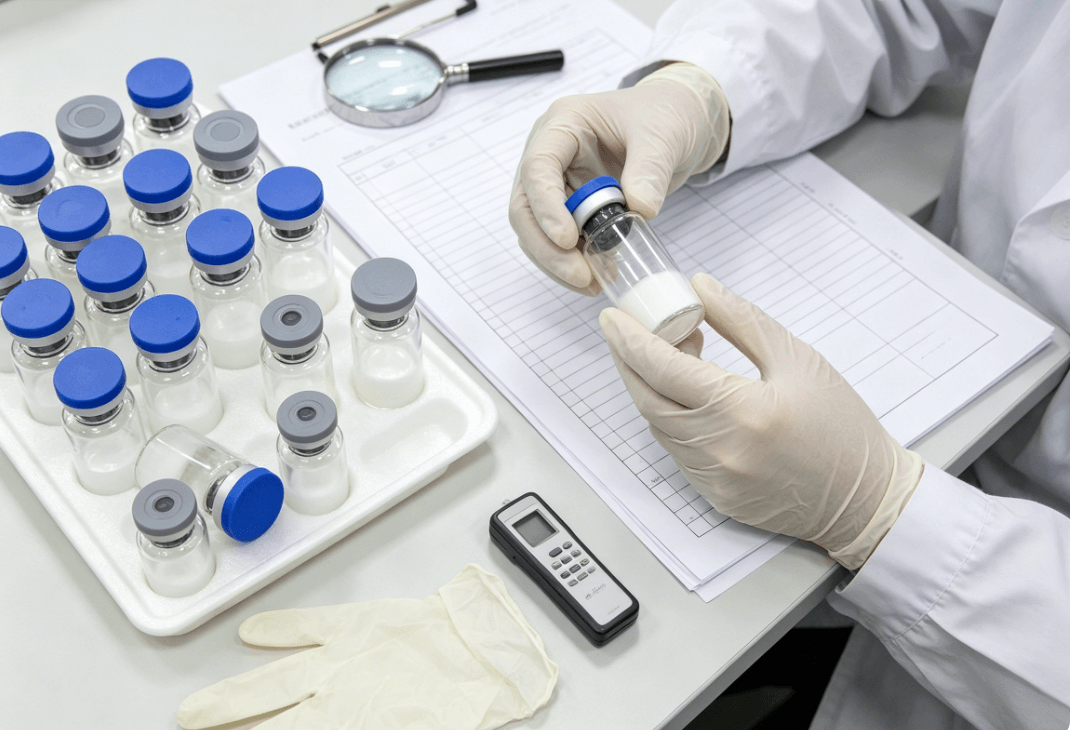
In the field of peptide research, the integrity of the molecule is as important as the hypothesis itself. Research-grade semaglutide must be synthesized with precision to ensure the fatty acid side chain is correctly acylated.
Substandard synthesis leads to:
- Reduced Receptor Affinity: Incorrect amino acid sequences fail to trigger the GLP-1 receptor effectively.
- Rapid Degradation: If the DPP-4 protection is compromised, the peptide will not reach the target tissues.
- Inconsistent Data: Impurities can trigger inflammatory responses in models, confounding metabolic data.
Sourcing peptides from established suppliers, such as the specialized selections found at ACDC Source’s Peptide Category, ensures that the material meets the stringent purity requirements necessary for reproducible scientific discovery. High-performance liquid chromatography (HPLC) and Mass Spectrometry (MS) data are typically the gold standards for verifying these research materials.
Experimental Design Considerations
When incorporating semaglutide into a weight management study, researchers must account for several physiological factors:
- Dose Escalation: To mimic clinical observation and avoid acute GI distress in models, studies often utilize a titration protocol.
- Water Consumption: Due to its effect on gastric emptying and satiety, fluid intake monitoring is essential to differentiate between true weight loss and changes in hydration.
- Lean Mass Preservation: A critical area of current research is determining how much weight loss is adipose tissue versus skeletal muscle.
Future Directions in Peptide Research
The study of semaglutide is expanding beyond simple weight management. Researchers are now looking into its neuroprotective properties, its impact on Non-Alcoholic Steatohepatitis (NASH), and its potential to reduce systemic inflammation.
As the industry moves toward more sophisticated peptide combinations, semaglutide remains the foundational benchmark. Its ability to achieve “chemical stability” while maintaining “biological mimicry” provides a roadmap for future drug design in the metabolic space.

FAQ
What is the purity requirement for semaglutide in laboratory research?
Most peer-reviewed metabolic studies require a purity level of >98%. This ensures that any observed physiological changes are a result of the GLP-1 receptor agonism and not a reaction to residual solvents or truncated peptide sequences.
How should semaglutide be stored for long-term studies?
In its lyophilized (freeze-dried) state, semaglutide is stable at room temperature for short periods but should be stored at -20°C for long-term stability. Once reconstituted in bacteriostatic water or sterile saline, it should be kept at 2-8°C and used within a specific window to prevent peptide fibrillation.
Is semaglutide the same as Tirzepatide in research?
No. While semaglutide is a selective GLP-1 receptor agonist, Tirzepatide is a dual agonist targeting both GLP-1 and GIP (Glucose-dependent Insulinotropic Polypeptide) receptors. They represent different classes of metabolic research tools.
Why is semaglutide considered “DPP-4 resistant”?
It contains a substitution of alpha-aminoisobutyric acid at position 8. The enzyme dipeptidyl peptidase-4, which normally “clips” the peptide at this site, cannot recognize or break this modified bond, allowing the peptide to circulate longer.
Reference Sources
- The New England Journal of Medicine (NEJM): “Once-Weekly Semaglutide in Adults with Overweight or Obesity.”
- Journal of Medicinal Chemistry: “The Engineering of Incretin Mimetics: Fatty Acid Acylation Techniques.”
- FDA Center for Drug Evaluation and Research: Technical Brief on GLP-1 Receptor Agonists.

-1-800x800.png)
-800x800.png)
-800x800.png)
-800x800.png)
-800x800.png)
-800x800.png)
-800x800.png)
-800x800.png)
-800x800.png)
-800x800.png)
-800x800.png)
-800x800.png)
-800x800.png)
-800x800.png)
-800x800.png)